
Why Messy Journal Pages Help You Keep Writing
My Hobonichi for the first week of April looks like someone had a very public breakdown in ink. There are three entries that got crossed out before the end of the first sentence. There's a page where I clearly started a list, then abandoned it and drew a small spiral. There's a day — I remember this one — where I wrote "I don't know what I'm doing" four times in a row and then closed the notebook and made coffee.
And then, all of sudden, one day, the entries were longer. More coherent. I could feel the practice settling into something that belonged to me rather than something I was performing for.
The April pages made the May pages possible. Not despite the mess, but because of it.
What we actually think is supposed to happen
There's a version of journaling that lives in the collective imagination and I know exactly what it looks like because I've saved more than my share of examples on Pinterest. The spread is gorgeous. The handwriting is even. The prompts are thoughtful and the answers are wise and the whole thing looks like someone had a meaningful morning and documented it beautifully.
That version of journaling is real. I've had those mornings. But what it doesn't show — what it can never show by the nature of what it is — is all the pages that came before it. The weeks of half-formed sentences. The days where the only entry was a date and then nothing. The entries that were so raw and unfinished that you'd never photograph them for anyone.
Those pages are the practice. The beautiful spread is occasionally what the practice produces. And if you're only trying to produce the beautiful spread, you'll stop every time the page looks like April.
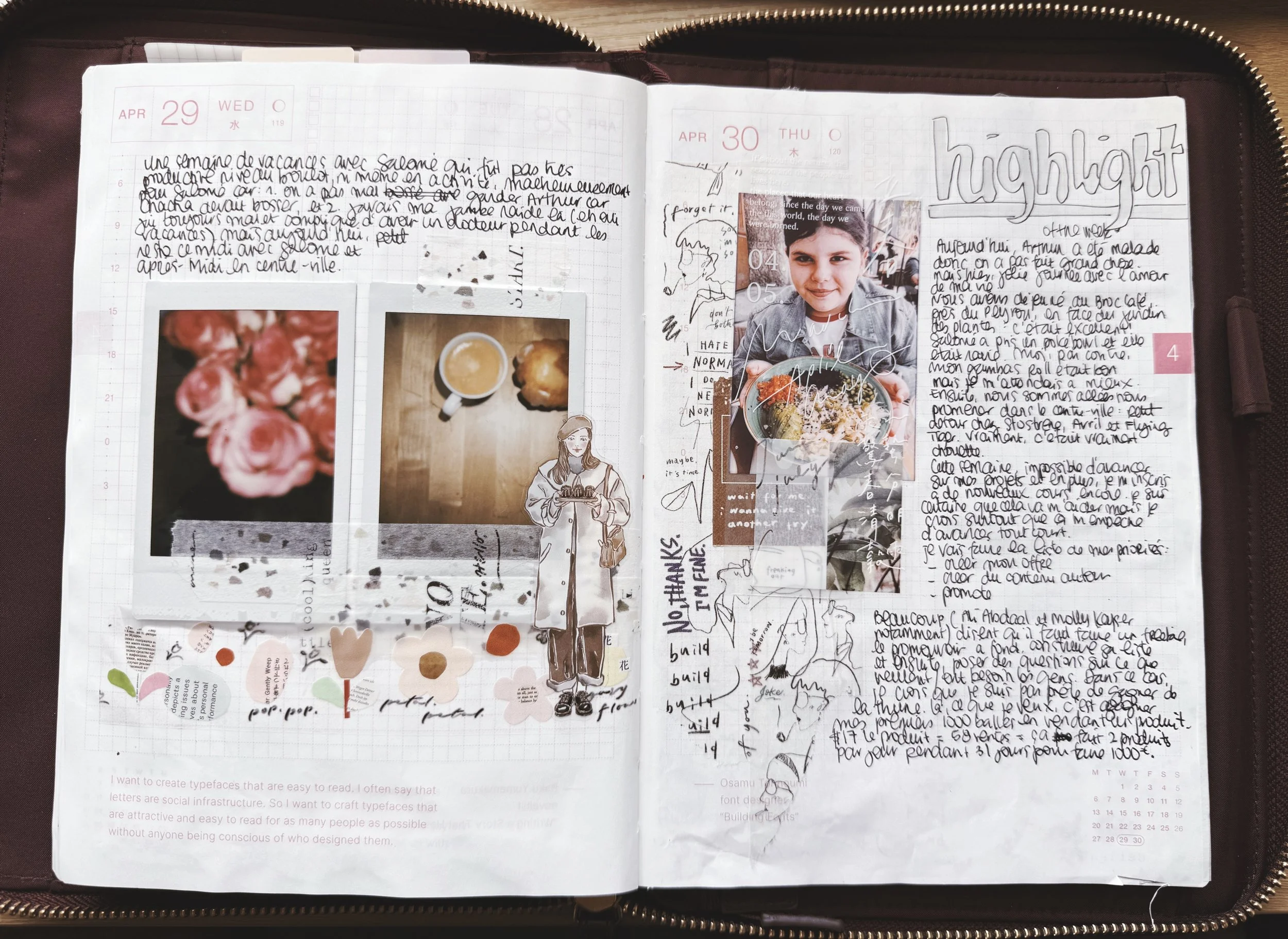
Messy pages are evidence of contact
Here's how I've come to think about this: a messy page is evidence that you made contact with something real.
When an entry gets crossed out halfway through, it's usually because the sentence started going in a direction that wasn't quite honest — and you felt that and stopped. That's not failure. That's calibration. That's the practice working.
When the handwriting is uneven and the thoughts are circular and you write the same thing three different ways before giving up on the paragraph, you're not doing journaling wrong. You're in the middle of it. The middle is supposed to look like that.
The mess on the page is contact with your actual state. And your actual state is what the practice is for.
Why aesthetic-first journaling accidentally breaks the practice
I want to be careful here because I love beautiful notebooks and good pens and the particular pleasure of a page that looks right. That's real and it matters and I don't think there's anything shallow about caring what your journal looks like.
But there's a version of aesthetic-first journaling that accidentally turns a private practice into a public-facing one — even if you never share a single page. It happens when the criteria for "good journaling" becomes visual. When you're judging the entry by how it looks rather than what it does.
And once that happens, a messy page isn't just a bad-looking page. It's evidence that you didn't journal correctly. Which means the next time you sit down and the page comes out messy, you feel like you failed. And eventually you stop sitting down at all.
The practice breaks not because you stopped caring, but because the aesthetic standard made the honest pages feel like the wrong kind of pages.
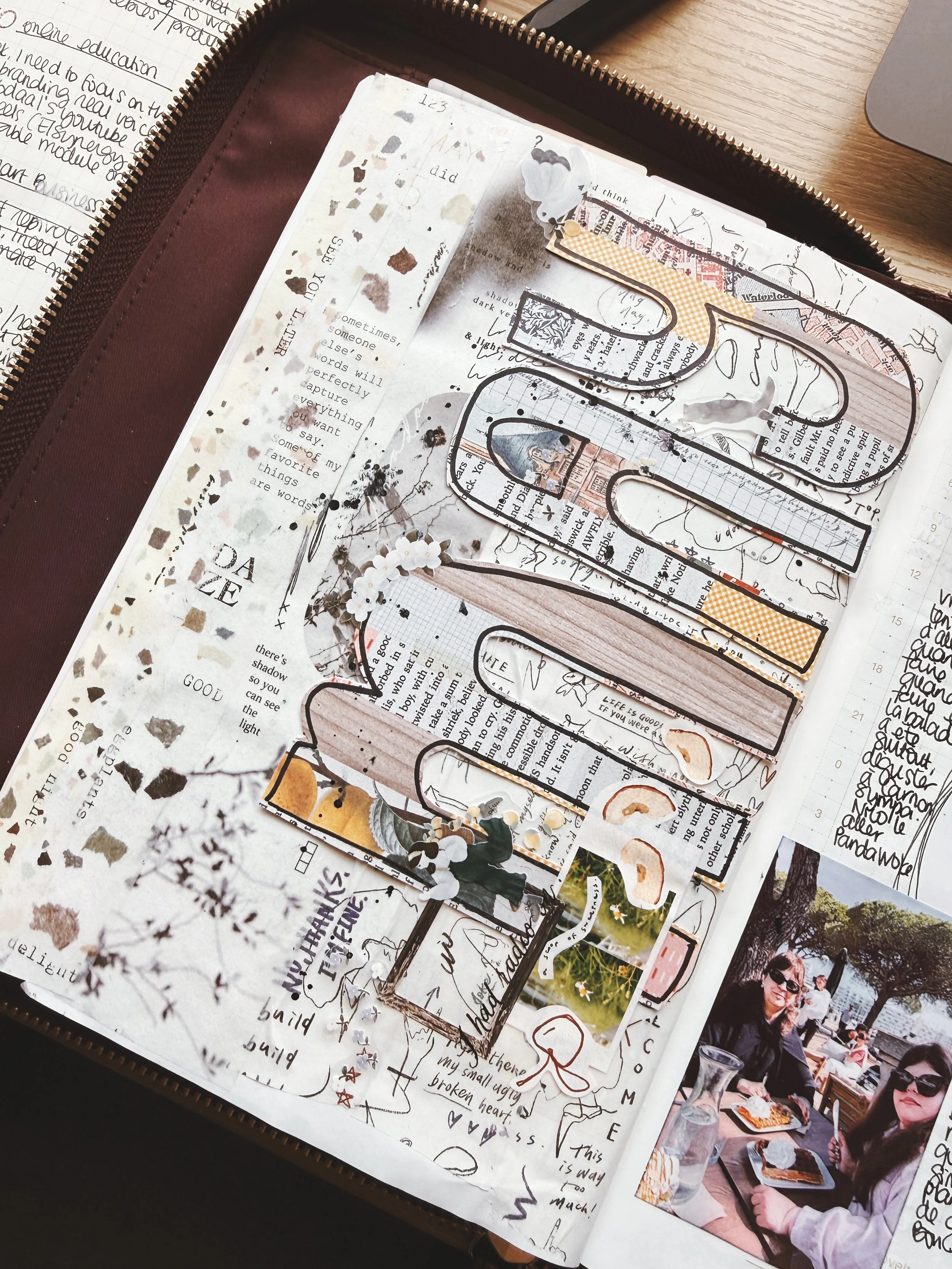
What a messy page is actually telling you
I have a theory about the pages that come out wrong. They tend to appear on the days when something is genuinely unresolved — when I'm not sure how I feel yet, when something is happening that I haven't figured out how to think about, when I'm tired or distracted or somewhere between two versions of a decision.
Those are exactly the days the practice is most useful. And those are the days the page is most likely to look like a mess.
This is not a coincidence. The mess is the content. The crossed-out sentences are the thing you almost said. The repeated spirals are the thought you haven't quite caught yet. The page that ends abruptly in the middle is the morning when something stopped you and you put the pen down rather than pretend.
A clean, well-structured page is often the page of a morning when things were already clear. A messy page is often the page of the morning when they weren't — which means it's the page that did the most work.
How to trust a journal that doesn't look finished
The shift I'm describing isn't about lowering your standards. It's about changing what you're looking at to measure whether the practice is working.
Instead of: does this page look like something?
Ask: did I show up to it?
Instead of: is this entry useful or beautiful or coherent?
Ask: is this entry honest?
Honesty is almost never clean. It arrives in the middle of a sentence you change three times. It hides in the margin note you wrote sideways because you weren't sure where else to put it. It's in the entry that trails off before the end because you'd said the actual true thing and didn't know what came after it.
The unfinished journal is not a failed journal. It's a journal in the middle of being useful. Which is the only state a journal can ever really be in.
If you want to try writing one honestly messy page — just to prove to yourself that the mess is survivable and the practice is still there — Your First Intentional Page is made for exactly this. It won't ask you to produce something beautiful. It'll ask you to show up to something real. Download it free below.