
Flodesk vs Mailchimp: My Honest Switch
> This post contains an affiliate link for Flodesk. If you sign up through it, I get a small commission, at no extra cost to you. I only recommend tools I actually pay for and actually use — you'll see the real numbers below, not the marketing ones.
In 2020, I left Mailchimp. I want to be precise about the year because I think it matters — this wasn't a recent decision, this is a tool I've now lived with for 6 years, long enough to know it wasn't a honeymoon phase.
I'd been struggling with Mailchimp for a while before that — the segmentation, the tags, the entire internal logic of how you were supposed to organize a list. It never felt intuitive. It felt like I was fighting the platform to do something that should have been simple. And then, on top of that, Mailchimp announced they were raising their prices. That was the final push. I was already frustrated, and now the frustrating tool was about to cost more.
Around the same time, I was listening to Jenna Kutcher's podcast, and she mentioned Flodesk. I didn't research for weeks or compare ten platforms in a spreadsheet. I just took the opportunity in front of me and switched. Six years later, I don't regret it. Not even a little.
What was actually wrong with Mailchimp, specifically
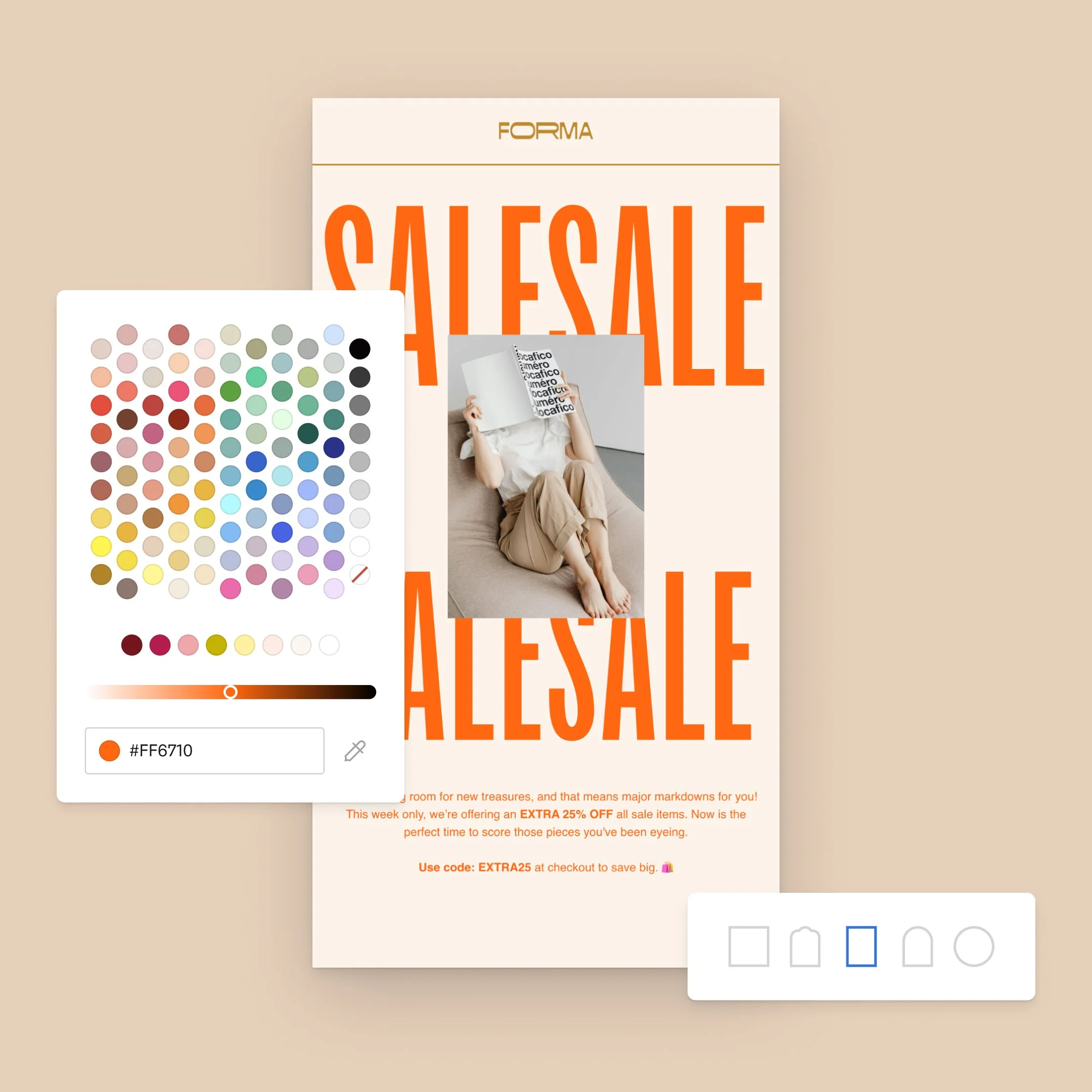
It wasn't one big thing, it was the accumulation. Building a segment meant tags, then automations referencing those tags, then a separate workflow per tag — and I kept finding people in the wrong sequence months later. The whole system felt like it was designed for someone with a marketing degree, not someone trying to write a Sunday email to people who trusted her.
What Flodesk actually does differently
The segmentation lives inside the opt-in forms themselves, through something Flodesk calls Form Preferences. Someone signs up through a specific form — say, the Side Hustle Audit — and that's it, the segment exists, visually, without me building a separate automation logic for every single tag combination. Ex. when you take the Side Hustle Audit quiz, you get your Side Hustler profile: you’re either an Overthinker / aRestarter / a Circler. So what does Flodesk do? Depending on your result, you end up in a segment based on your profile and you receive a dedicated email based on your profile. Isn’t that cool?!
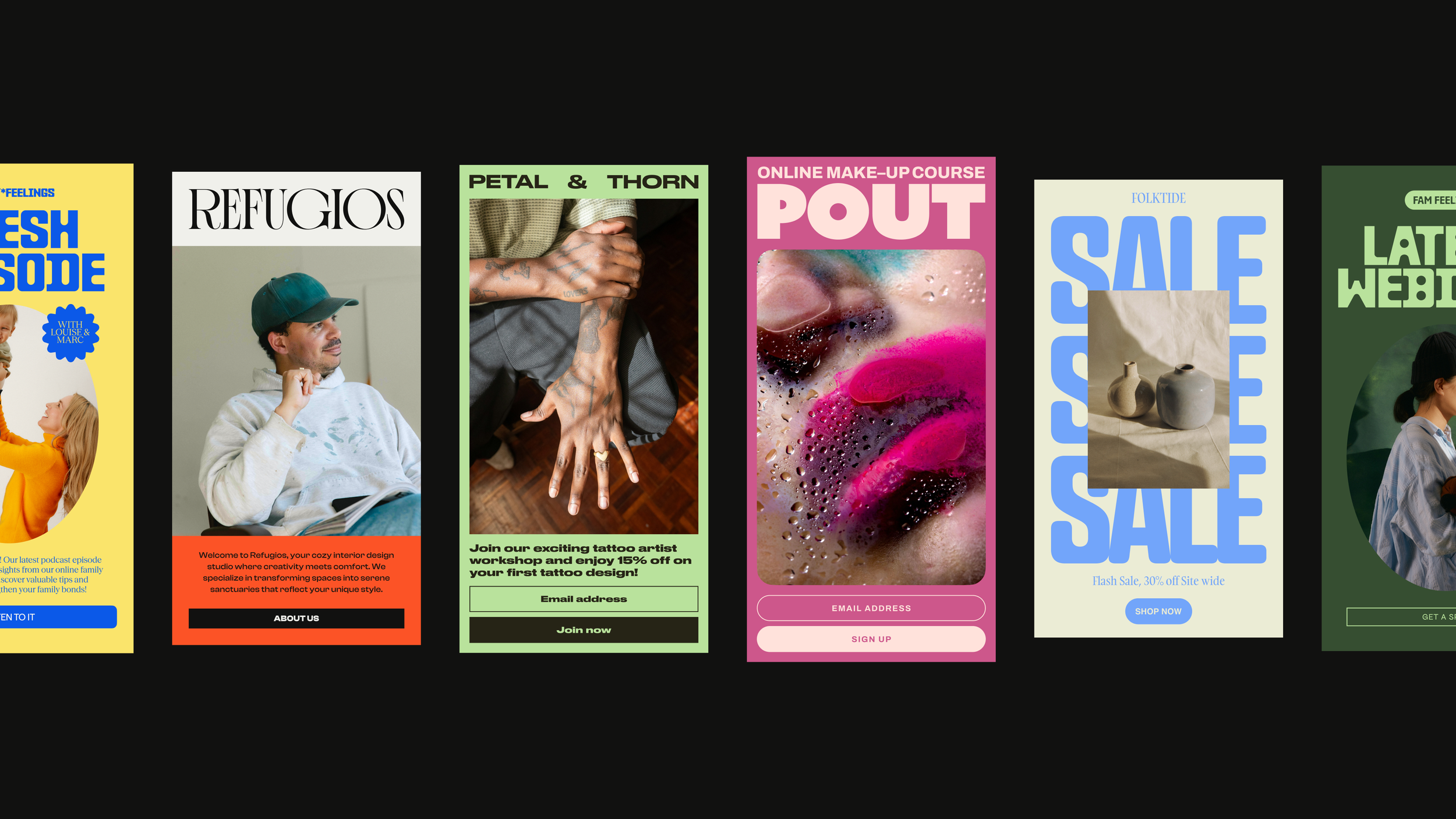
Let’s talk about the design now. The emails themselves look like something a person designed, not something assembled from a corporate template library. That mattered more than I expected it to. The Croissant Club is supposed to feel like a letter from a friend at 8pm on a Sunday — and on Mailchimp, even my plainest templates kept a corporate undertone I could never fully strip out.
The real numbers
Here's where I stop being vague, because vague is exactly what I promised never to do here. These are my metrics since I joined Flodesk.
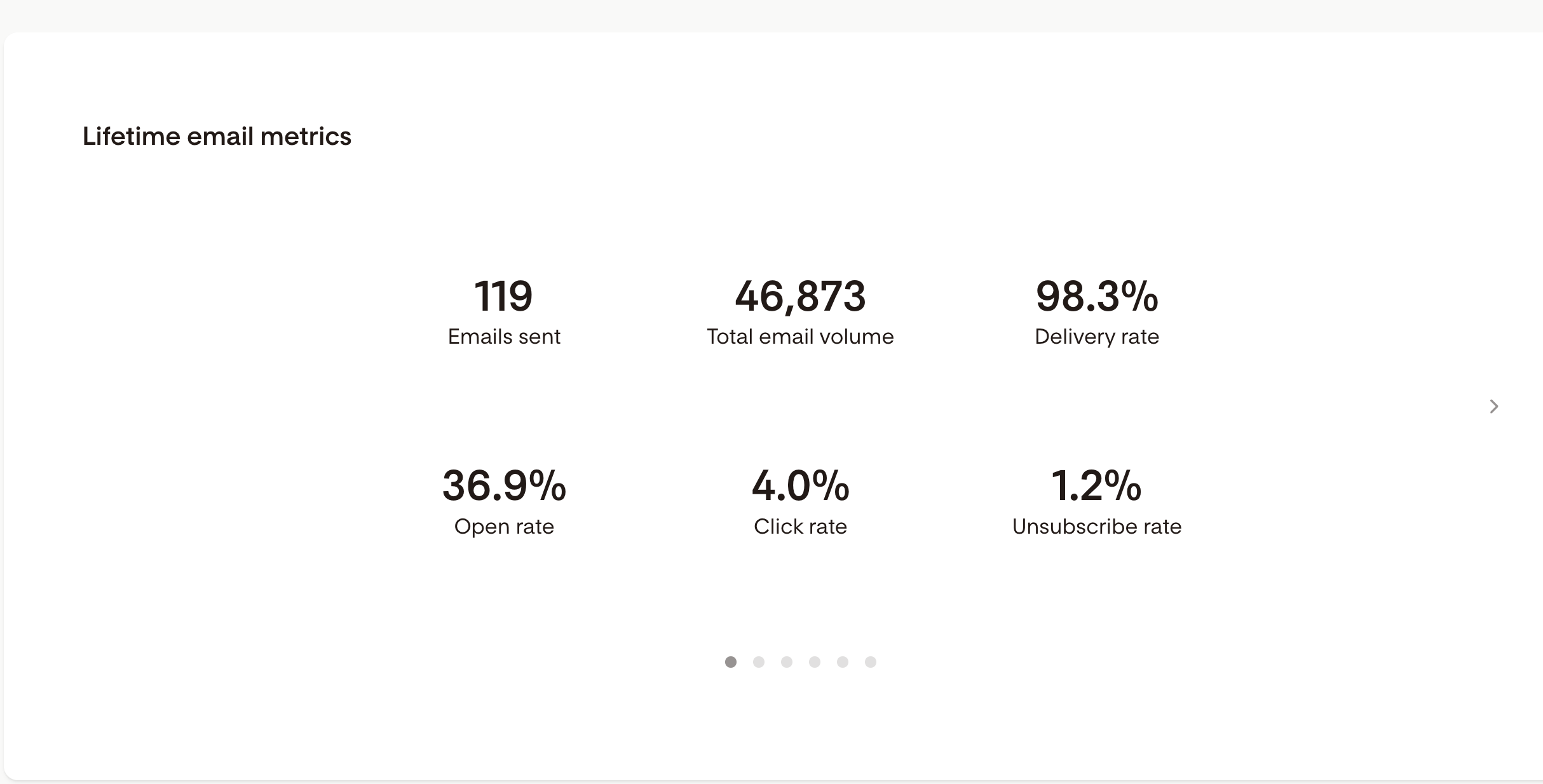
Emails sent (lifetime): 119
Total email volume: 46,873
Average list size per send: ~394 people (46,873 ÷ 119) — consistent with a list still in active growth, not a sign of anything wrong
Delivery rate: 98.3% — excellent; indicates a healthy sender reputation, no spam-filtering or domain configuration issues
Open rate: 36.9% — solid, notably above the typical newsletter/creator industry average (which usually sits around 20-30%); confirms that subscribers to the Croissant Club are genuinely opening, trust is building
Click rate: 4.0% — within normal range; click-to-open ratio is about 11% (4.0 ÷ 36.9), meaning a reasonable share of openers take action. Nothing alarming or exceptional — typical for a confessional-style email where reply-based CTAs (rather than clicks) may be doing some of the engagement work that wouldn't show up in this metric
Unsubscribe rate: 1.2% — slightly high if measured per single send, but healthy if cumulative across all 119 sends ("lifetime" framing suggests the latter), in which case 1.2% over time is well within a sustainable range
What didn't change
I want to be honest about this part too. Flodesk didn't fix my actual problem, which was consistency — there were still weeks I didn't send anything at all. A tool doesn't build the habit. It just stopped being the excuse, but it definitely helped me being faster and more efficient.
If you're deciding between the two
If you're at zero subscribers, a free tier somewhere is genuinely fine to start with — I'm not going to tell you to spend money you don't have yet on a tool you haven't tested a real audience with. But if you're building more than one lead magnet, or you're tired of fighting tags and segments that don't hold up, the switch is worth it. That's where I was in 2020. That's probably where you are if you're reading this.
If you want to try it, my Flodesk link is here: it'll get you 25% off your first year. And if you don't, the Croissant Club newsletter is still free either way, every Sunday at 8pm.